
The TPLO healing process unfolds in stages over roughly twelve to sixteen weeks, starting with strict rest immediately after surgery and gradually progressing to normal activity as the bone heals around the surgical plate. Understanding what to expect during TPLO recovery time can make the weeks ahead feel far less overwhelming, both for you and for your dog. At Brinker Veterinary Hospital in Lake Orion, MI, we walk every family through the TPLO healing process step by step, from the first wobbly steps at home to the final follow-up X-ray that confirms full bone healing.
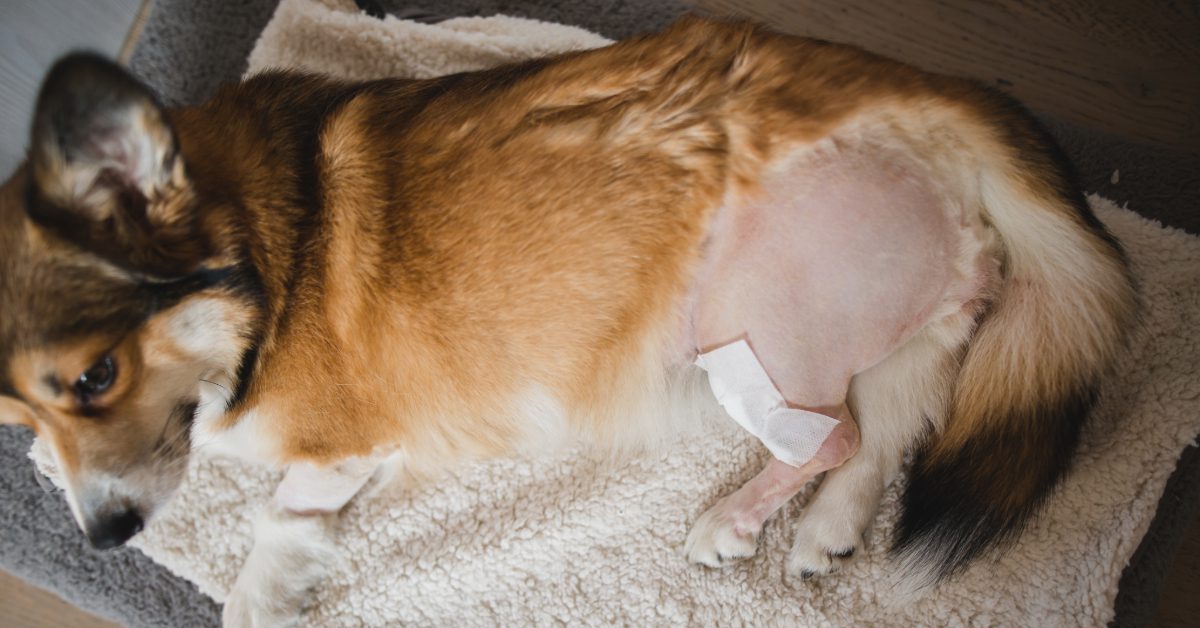
Week-by-Week TPLO Recovery
Every dog heals at a slightly different pace, but the TPLO healing process generally follows a predictable timeline that your veterinary team will track closely with hands-on exams and X-rays.
- Days 1–3: Rest, pain management, and close monitoring of the incision for swelling or discharge
- Weeks 1–2: Short leash walks for bathroom breaks only 3-4 times daily for only about 5 minutes.
- Weeks 3–4: Gradual increase in weight-bearing as swelling decreases and short walks for bathroom breaks lengthen slightly to 10 minutes.
- Weeks 5–6: Continued leash walking for bathroom breaks with slow, steady increases to 15-20 minutes.
- Weeks 7-8: Increase leash walks to 20-30 minutes still no more than 3-4 times daily for bathroom breaks.
- Week 8: Recheck X-rays to evaluate bone healing before activity restrictions begin to lift
- Weeks 9-11: A longer lead (up to 15’) can be used to give your pet more freedom during walks and gradually increase length of walks to 30+ minutes.
-
This week-by-week TPLO recovery plan is a general guide. Larger dogs, older dogs, or dogs with additional joint issues may need a slightly longer TPLO healing process before they’re cleared for unrestricted activity.
Why the TPLO Healing Process Takes Time
TPLO surgery repositions the tibia and relies on bone healing around a surgical plate and screws, much like healing a fracture. Rushing this part of the TPLO recovery time can put unnecessary stress on the implant and increase the risk of complications, which is why strict adherence to your recovery plan matters so much. Bone typically takes a minimum of eight weeks to heal sufficiently, and your veterinarian will confirm this with X-rays rather than relying on how your dog looks or acts at home, since dogs are often far more comfortable than their healing bone would suggest.
How Pain Is Managed During Recovery
Most dogs receive pain medication for the first one to two weeks following surgery, with the dosage and duration tailored to your dog’s comfort level by your veterinary team. As the TPLO healing process continues and inflammation subsides, many dogs need less medication, though your veterinarian will guide any changes rather than adjusting doses at home.
Activity Restrictions
Activity restriction is one of the most important parts of the entire TPLO healing process, and it’s also the part many pet owners find hardest to enforce, especially once their dog starts feeling better.
- No running, jumping, or playing with other pets until your veterinarian clears full activity
- No off-leash time outdoors, even in a fenced yard, during the early TPLO recovery time
- No stairs or furniture jumping unless specifically approved by your veterinary team
- Crate or confined-space rest between supervised leash walks
Many dogs feel noticeably better within the first few weeks, but feeling better is not the same as being fully healed. Sticking to activity restrictions throughout the TPLO healing process protects the surgical site and gives the bone the time it needs to heal properly around the plate.
Signs of Healing
As the TPLO healing process moves forward, most pet owners start to notice encouraging changes that signal recovery is on track.
Positive Signs During TPLO Recovery Time
- Decreasing swelling and bruising around the incision within the first one to two weeks
- Gradual increase in weight-bearing on the surgical leg during walks
- Improved willingness to stand, sit, and move around the house
- A clean, dry incision that closes and heals without redness or discharge
Your veterinarian will also confirm healing progress with recheck exams and X-rays at key points in the TPLO healing process, since visible improvement at home doesn’t always tell the full story of how the bone is healing internally.
What Are the Signs of a TPLO Complication I Should Watch For?
The signs below are the clearest red flags that something may be off during the TPLO healing process. If you notice any of these, call our team right away rather than waiting for your next scheduled recheck:
- Sudden increase in swelling, redness, or warmth around the incision
- Discharge, odor, or opening of the incision site
- A sudden return to non-weight-bearing lameness after your dog had started using the leg
- Loss of appetite, lethargy, or fever during TPLO recovery time
- Audible clicking, popping, or instability in the operated leg
Questions about healing, swelling, or limping after surgery? Our compassionate team is here to support your dog’s recovery every step of the way. Catching potential complications early in the TPLO healing process often makes a meaningful difference in how quickly and completely your dog recovers, so don’t hesitate to call us with any concerns rather than waiting for your next scheduled visit.
What Are the Most Common TPLO Complications?
Most dogs heal from TPLO surgery without significant problems, but possible complications can include infection at the incision site, irritation from the surgical implant, or, less commonly, a delay in bone healing. This is why recheck visits and X-rays are such an important part of the TPLO healing process, allowing your veterinarian to catch and address issues early, well before they become more serious.
How Long Until My Dog Is Back to Normal?
Most dogs complete the TPLO healing process and return to full, unrestricted activity within fourteen to sixteen weeks, though many are walking comfortably on the leg much sooner. Full return to running, jumping, and off-leash play should always wait until your veterinarian confirms complete bone healing on X-rays.
Supporting Your Dog Through Every Stage of Recovery
The TPLO healing process asks for patience, consistency, and close communication with your veterinary team, but the payoff is a stable, comfortable knee that can carry your dog through years of active life in Lake Orion and beyond. Brinker Veterinary Hospital schedules recheck appointments throughout the entire TPLO recovery time to confirm healing on X-rays, adjust activity guidelines as needed, and answer any questions that come up along the way. Schedule a post-surgery recheck appointment to make sure your dog’s TPLO healing process is progressing exactly as it should, or call us anytime with recovery questions or concerns.
Recent Posts
About Us
At Brinker Veterinary Hospital we foster long, healthy lives with low-stress care and an array of services. Our team can’t wait to meet you and become a trusted partner in the care of your animal family member!