
Caring for your dog after TPLO surgery means strictly limiting activity, keeping the incision clean and monitored, and following your veterinarian’s personalized recovery plan for medication, rechecks, and exercise progression. Good TPLO post operative care in the days and weeks after surgery plays a huge role in how smoothly your dog heals, which is why our team at Brinker Veterinary Hospital sends every family home with clear instructions tailored to their dog’s specific procedure and lifestyle.
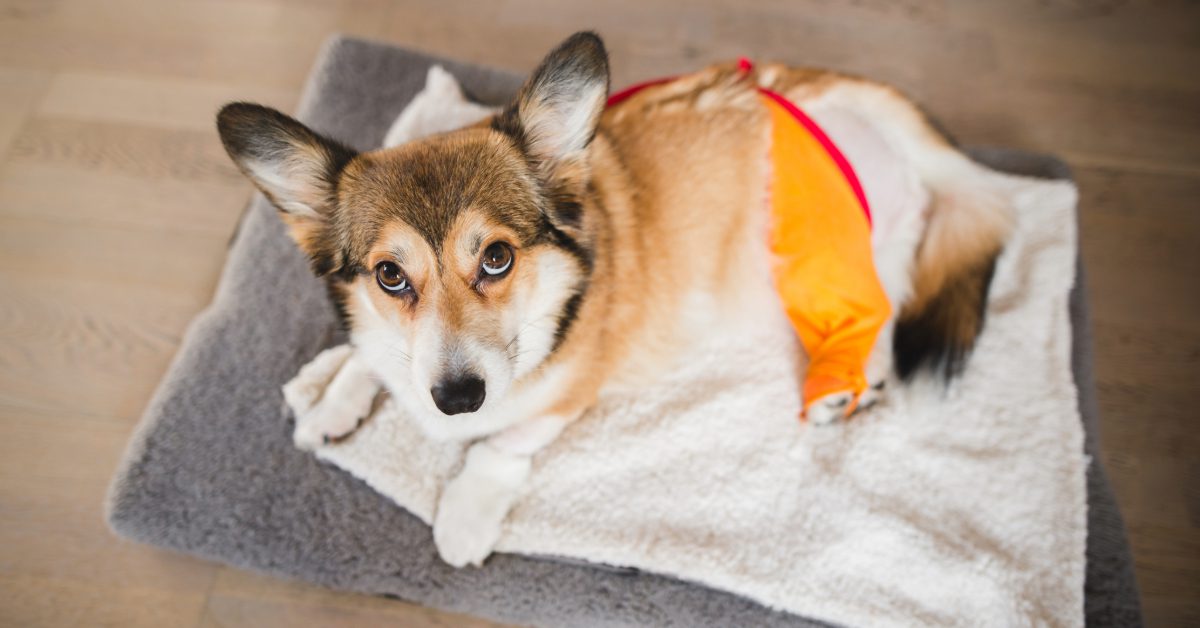
First 14 Days After Surgery
The first two weeks of TPLO post operative care set the tone for the rest of your dog’s recovery, and this is the period where strict rest matters most.
- Keep your dog confined to a crate, pen, or small room between bathroom breaks
- Limit outdoor time to short, leashed bathroom trips only, with no off-leash activity
- Watch the incision daily for swelling, redness, or discharge
- Give all prescribed medications exactly as directed by your veterinarian
- Prevent licking or chewing at the incision using an e-collar or recovery suit if recommended
Many dogs feel surprisingly comfortable within the first week, but that comfort doesn’t mean the bone has healed. Sticking closely to your veterinarian’s TPLO post operative care instructions during this window helps protect the surgical site from unnecessary stress.
Returning Home After Surgery
When you bring your dog home, expect some grogginess from anesthesia for the first day, along with mild swelling around the incision. Your discharge instructions from Brinker Veterinary Hospital will outline exactly what’s normal to see during this early stage of TPLO post operative care and what should prompt a call to our team. It’s also normal for appetite to be slightly reduced the first evening, though most dogs are eating normally again by the following day.
Setting Up a Recovery-Friendly Space
Before your dog comes home, it helps to prepare a quiet recovery area in advance. Non-slip flooring, a low-sided bed, and easy access to food and water without needing to navigate stairs all make the first stretch of TPLO post operative care more comfortable. Removing tempting furniture to jump on, even temporarily, can prevent accidental strain on the healing leg.
Incision Care
Proper incision care is one of the most visible parts of TPLO post operative care, since this is the area you’ll be checking most closely each day.
What to Watch For
A healthy incision after TPLO surgery should appear clean, dry, and gradually less swollen as the days pass. Your veterinarian will let you know whether your dog has sutures, staples, or surgical glue, since each requires slightly different monitoring during the TPLO post operative care period.
- Mild swelling and bruising in the first few days, which should slowly improve
- A small amount of clear or slightly pink discharge in the first 24–48 hours
- Skin that stays closed along the entire length of the incision
Any sudden increase in swelling, an odor, ongoing discharge, or an incision that opens should be reported to your veterinary team right away rather than addressed at home, since these can be signs of infection or other complications that need professional evaluation.
Crate Rest Tips
Strict confinement, often called crate rest, is one of the cornerstones of effective TPLO post operative care, and it’s also one of the hardest parts for many families, especially with an energetic dog.
- Choose a crate or pen just large enough for your dog to stand, turn around, and lie down comfortably
- Place the crate in a calm, low-traffic area of the home away from stairs or other pets
- Use food puzzles, calming chews, or gentle enrichment to help your dog settle during confinement
- Carry small or injured dogs outside rather than letting them navigate stairs independently
- Keep other pets and young children from encouraging rough play during this stage of TPLO post operative care
Crate rest can feel restrictive, but consistent confinement during the early weeks of recovery significantly reduces the risk of re-injury or implant complications.
Safe Exercise Progression
As healing advances, your veterinarian will guide a gradual increase in activity as part of your dog’s overall TPLO post operative care plan. This typically starts with very short, slow leash walks and builds over several weeks based on your dog’s progress and follow-up X-rays.
- Short, slow leash walks beginning only when your veterinarian approves them
- Gradual increases in walk duration, never distance or intensity increases on your own timeline
- No running, jumping, rough play, or off-leash time until your veterinary team clears full activity
- Continued use of a leash even in a fenced yard throughout much of the recovery period
When Can My Dog Walk, Climb Stairs, or Be Off-Leash After TPLO?
Specific guidelines for return to daily activity will be provided based on your pet’s healing. Most pets should avoid stairs for the first 6-8 weeks. After 8-week radiograph recheck and clearance by your veterinarian, on leash walks can usually be slowly started. No off-leash activity should be considered until after your dog is fully cleared and on-leash activity is methodically increased, which is usually a minimum of 16 weeks. Talk with our team about safe recovery at home before making any changes to your dog’s activity level, since every TPLO post operative care plan is customized to the individual dog’s healing progress.
How Long Does TPLO Post Operative Care Last?
Most dogs need close, structured TPLO post operative care for around sixteen weeks following surgery, though the most restrictive phase typically lasts only the first six to eight weeks. Your veterinarian will use recheck exams and X-rays, not just how your dog looks at home, to decide when it’s safe to loosen restrictions.
Can I Give My Dog Extra Medication If They Seem Uncomfortable?
Never adjust or add medications without speaking to your veterinary team first. Pain levels and swelling can vary day to day during TPLO post operative care, and our team would rather hear from you and offer guidance than have you guess at home with dosing or new products.
Caring for Your Dog With Confidence at Home
Recovering from TPLO surgery can feel overwhelming, but you don’t have to navigate TPLO post operative care alone. Our veterinary team at Brinker Veterinary Hospital is here to guide you with trusted advice and personalized support at every recheck visit, phone call, and question along the way. Book a follow-up visit to keep your dog’s recovery on track, and don’t hesitate to reach out anytime you’re unsure whether something you’re seeing at home is part of normal healing.
Recent Posts
About Us
At Brinker Veterinary Hospital we foster long, healthy lives with low-stress care and an array of services. Our team can’t wait to meet you and become a trusted partner in the care of your animal family member!