
Tibial Plateau Leveling Osteotomy (TPLO) is a surgical procedure that changes the angle of a dog’s shin bone to stabilize the knee after a torn cranial cruciate ligament. If your dog has started limping, slowing down on walks, or struggling to get up after resting, your veterinarian may recommend TPLO surgery as the most reliable way to restore comfortable movement. At Brinker Veterinary Hospital in Lake Orion, MI, our team walks pet owners through every stage of TPLO surgery for dogs, from diagnosis to full recovery, so you know exactly what to expect.
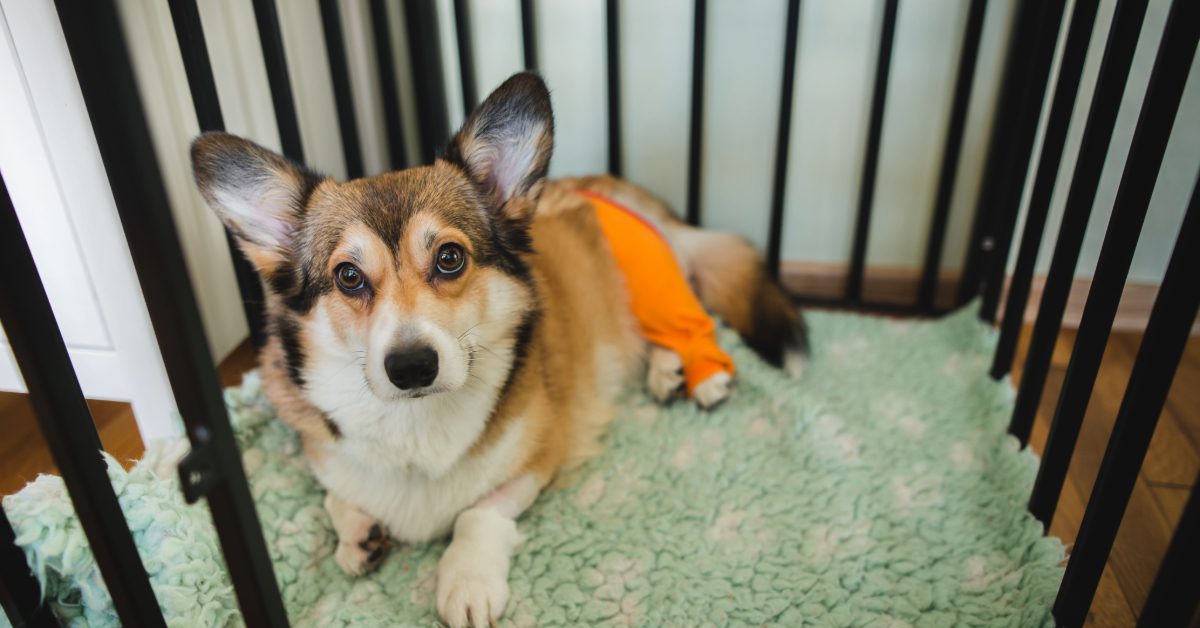
What Is TPLO Surgery?
TPLO surgery is an orthopedic procedure designed to treat a torn or partially torn cranial cruciate ligament (CCL), the canine equivalent of the human ACL. Rather than trying to repair the damaged ligament directly, Tibial Plateau Leveling Osteotomy changes the mechanics of the knee joint entirely, removing the need for an intact ligament in the first place.
How the TPLO Procedure Works
During TPLO surgery, a veterinary surgeon makes a precise curved cut in the top of the tibia (shin bone) and rotates the tibial plateau to a flatter, more stable angle. A specialized bone plate and screws hold the bone in its new position while it heals, typically over several weeks. This adjustment levels out the surface the femur rests on, which stops the unstable, shifting motion that makes a CCL-deficient knee so painful.
Who Is a Candidate for TPLO?
TPLO surgery for dogs is generally recommended dogs of all sizes and activity levels as it has been shown to give the best “return to function” outcome. Your veterinarian will evaluate your dog’s size, activity level, and the severity of the ligament tear before recommending Tibial Plateau Leveling Osteotomy over other treatment options. Dogs over roughly 30 pounds, working and sporting breeds, and dogs with a complete CCL rupture tend to do especially well with TPLO surgery because the procedure provides reliable stability even under heavy, repetitive loading on the joint.
A thorough orthopedic exam, paired with sedated X-rays, helps our veterinarians confirm the diagnosis and rule out other causes of hind limb lameness, such as hip dysplasia or a luxating patella, before recommending TPLO surgery.
What Happens During a TPLO Procedure?
It helps to know what actually takes place once your dog is asleep on the surgery table. Here’s a simple, step-by-step look at a typical TPLO procedure:
- Your dog is placed under general anesthesia, and the leg is clipped and surgically prepped
- Our surgeon makes an incision over the knee to access the top of the tibia
- A specialized saw is used to make a precise, curved cut in the tibia, freeing the tibial plateau
- The tibial plateau is rotated to a flatter, more stable angle that no longer relies on the torn ligament
- A bone plate and screws are secured to the tibia to hold this new position while the bone heals
- The incision is closed, and your dog moves to recovery for monitoring as anesthesia wears off
The entire TPLO procedure typically takes one to two hours, with total time under anesthesia closer to two to three hours once prep and post-operative X-rays are included. Most dogs stay overnight at Brinker Veterinary Hospital so our team can monitor pain control before sending them home with detailed care instructions.
How Is TPLO Different From Other Knee Surgeries?
TPLO isn’t the only surgical option for a torn cranial cruciate ligament, and many pet owners want to know how it compares to techniques like lateral suture or TTA (Tibial Tuberosity Advancement) before moving forward.
- Lateral suture stabilizes the knee with a strong suture placed outside the joint rather than changing the bone’s angle, and tends to suit smaller, less active dogs best
- TTA, like TPLO, changes the underlying mechanics of the knee, but advances the tibial tuberosity forward instead of rotating the tibial plateau
- TPLO is generally considered the most reliable option for larger or more athletic dogs because it offers strong, long-lasting stability under heavy use
Every dog’s anatomy and activity level are different, so the right procedure isn’t always the same from one dog to the next. For a closer, side-by-side look at how these options compare, read our full comparison of TPLO vs other ACL surgery options for dogs.
Why Dogs Need TPLO?
Cranial cruciate ligament injuries are among the most common orthopedic conditions seen in dogs, and TPLO has become a preferred treatment because it offers strong, long-lasting joint stability. Some dogs tear the ligament suddenly during play or exercise, while others experience a slow, degenerative weakening of the ligament over time. Without treatment, an unstable knee continues to cause pain, inflammation, and progressive cartilage damage, which is why most veterinarians recommend addressing a CCL tear with TPLO surgery as soon as possible rather than waiting.
Common Causes of CCL Tears in Dogs
A few factors tend to increase the likelihood that a dog will need TPLO surgery:
- Excess body weight, which places added stress on the knee joint
- Rapid twisting or pivoting movements during play, running, or jumping
- Breed predisposition, especially in Labrador Retrievers, Rottweilers, and other large breeds
- Age-related degeneration of the ligament tissue over time
If you notice your dog limping, holding up a rear leg, or sitting with one leg extended out to the side, it’s worth scheduling an exam so our veterinarians can determine whether TPLO surgery is the right next step.
TPLO Recovery Timeline
Recovery after TPLO surgery is gradual and closely monitored, with most dogs returning to full, comfortable activity within three to four months. Every dog heals at a slightly different pace, but the general TPLO recovery timeline follows a predictable pattern.
- Weeks 1–2: Strict rest with leash-only bathroom breaks and incision monitoring
- Weeks 2–8: Gradual increase in short, controlled leash walks as the bone begins to heal
- Weeks 8–12: Follow-up X-rays to confirm bone healing before activity is expanded
- Weeks 12–16: Progressive return to normal activity, with full recovery for many dogs
Throughout this period, our team at Brinker Veterinary Hospital schedules recheck appointments to track healing with X-rays and make sure the TPLO surgery is progressing as expected.
Benefits of TPLO Surgery
Pet owners often ask whether TPLO surgery for dogs is truly worth the investment compared to other cruciate repair techniques, and for many dogs, the answer is yes. While TPLO surgery requires a larger upfront investment of time and cost than some alternative repairs, the long-term results often make it the most reliable choice for dogs that need to return to full activity. The full benefits of TPLO surgery include:
- High success rate, with most dogs returning to normal or near-normal function
- Excellent option for large, active, or athletic dogs that place heavy stress on the knee
- Slower progression of arthritis in the joint compared to some alternative procedures
- Long-term joint stability since the surgery changes the underlying mechanics of the knee rather than relying solely on a repaired or replaced ligament
Because every dog’s anatomy, activity level, and injury severity are different, our veterinary surgeons tailor each TPLO procedure and recovery plan to the individual patient.
Is TPLO Surgery Painful for Dogs?
Like any major orthopedic surgery, TPLO does involve some discomfort, but modern pain management protocols make the procedure far more comfortable than it once was. Dogs typically receive pain medication during and after TPLO surgery, and most start putting weight back on the leg within the first one to two weeks as swelling subsides and healing begins.
Moving Forward After TPLO Surgery
A torn cranial cruciate ligament doesn’t have to mean the end of your dog’s active lifestyle. Tibial Plateau Leveling Osteotomy gives many dogs a real path back to pain-free movement, whether that means daily walks around Lake Orion, weekend hikes, or simply climbing the stairs without hesitation. If your dog is showing signs of a knee injury, our team at Brinker Veterinary Hospital is here to evaluate their gait, discuss whether TPLO surgery is appropriate, and guide your family through every step of treatment and recovery. Schedule an orthopedic evaluation today to find out whether TPLO surgery for dogs is the right path for your companion. Call us at (248) 693-1677.
Recent Posts
About Us
At Brinker Veterinary Hospital we foster long, healthy lives with low-stress care and an array of services. Our team can’t wait to meet you and become a trusted partner in the care of your animal family member!